What Drives Portfolio Risk?
Portfolio risk is not just about how risky individual stocks are. It depends on how your holdings behave together. Understanding these drivers helps investors avoid false diversification and build portfolios aligned with their risk tolerance.
This guide covers the main factors that drive portfolio risk: volatility (how much prices swing), correlation (how similarly your stocks move), and concentration (how much you have in a few names or one sector). Once you understand these, you can use the portfolio risk calculator to measure your own portfolio and the optimizer to build allocations that match your goals.
Volatility: The Main Driver of Risk
Volatility measures how much a stock's or portfolio's price fluctuates over time. It's the main driver of risk: higher volatility means bigger swings and typically deeper drawdowns in bad years. High-volatility stocks (e.g. many growth names) increase portfolio risk when they have large weights; low-volatility stocks alone don't guarantee a low-risk portfolio—correlation and concentration matter too.
Examples:
- Growth stocks tend to be more volatile; defensive stocks tend to fluctuate less.
- A portfolio of 10 low-volatility but highly correlated stocks can still have high portfolio volatility.
- Volatility is only one input—combine it with correlation and concentration to see full risk.
Correlation Effects on Risk
Correlation describes how assets move relative to each other. If your stocks move up and down together, your portfolio risk remains high even if you own many positions. Correlation effects are why "many stocks" doesn't always mean low risk—when correlation is high, diversification helps less.
Examples:
- Highly correlated stocks amplify risk; low or negative correlation can reduce overall volatility.
- Many tech stocks are strongly correlated during market stress, so a tech-heavy portfolio stays risky.
This is why diversification doesn't always reduce risk — when stocks move together, you're not getting the diversification benefit you might expect.
When Diversification Helps (And Its Limits)
Diversification only works when assets are meaningfully different. Owning 10 stocks in the same sector or theme is often no safer than owning just one.
True diversification spreads risk across:
- Sectors
- Business models
- Geographies
- Asset types (stocks, ETFs, bonds)
Concentration Risk Explained
Concentration risk is when too much of your portfolio is in a single stock, sector, or theme. One large position can dominate your risk regardless of how many other holdings you have—so even with "many stocks," concentration can keep portfolio risk high.
Examples:
- Overweight positions increase downside risk; a 40% position in one stock drives a large share of portfolio volatility.
- Sector concentration (e.g. 60% technology) magnifies drawdowns when that sector falls.
- ETFs can introduce hidden concentration if they overlap with your individual stocks.
Understanding how risky your portfolio is requires analyzing concentration, not just the number of holdings. Use the portfolio risk calculator to see your risk score and concentration.
5. Portfolio-Level Behavior
Portfolio risk emerges from the interaction of all holdings. Even low-risk stocks can combine into a high-risk portfolio if correlations and weights are ignored.
This is why portfolio-level analysis is essential — risk cannot be understood by analyzing stocks in isolation.
Live portfolio preview
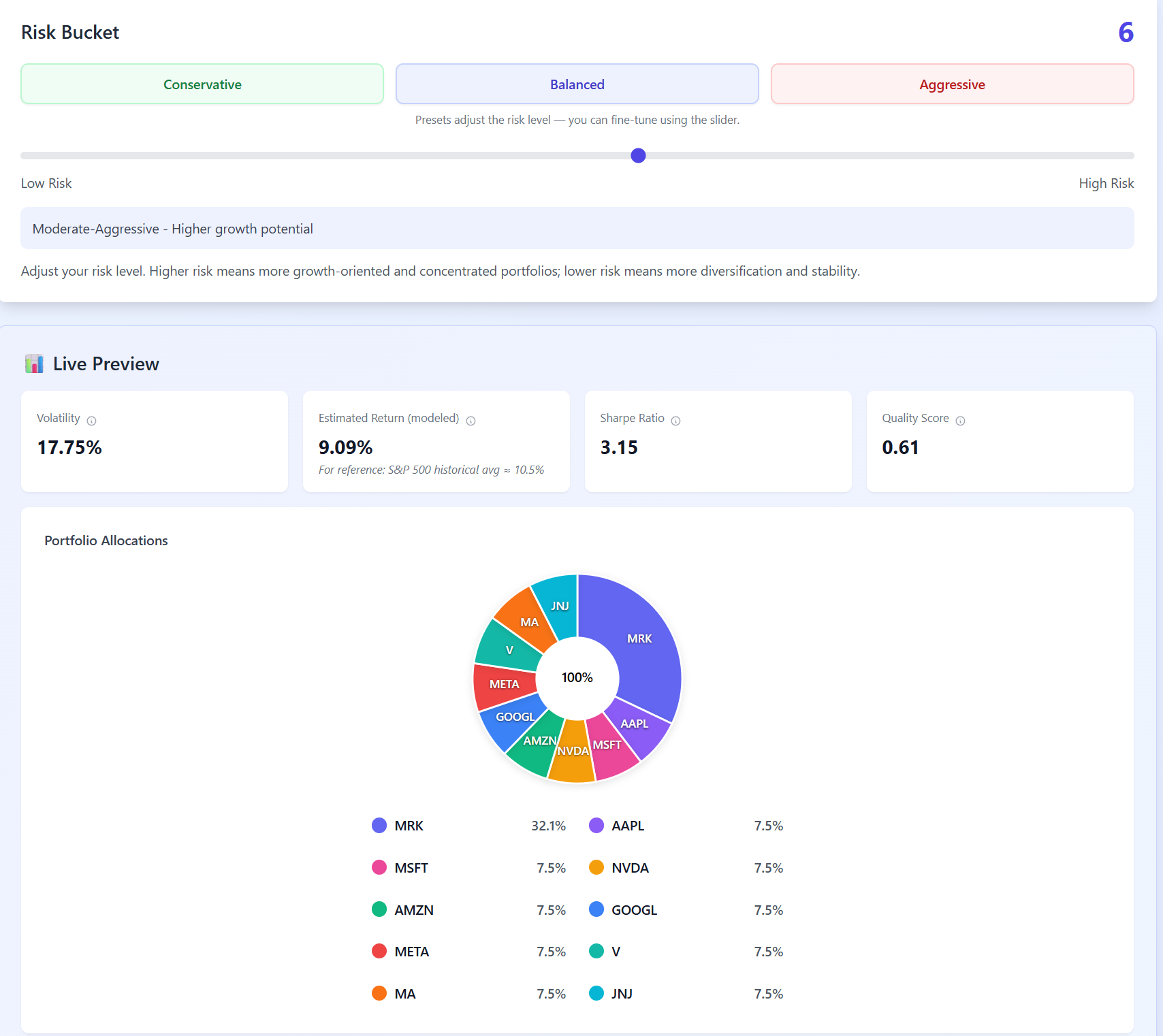
Adjusting your risk level reshapes the entire portfolio — from allocations and concentration to volatility and expected return.
What Drives Portfolio Risk — At a Glance
Analyze Your Portfolio Risk
See how volatility, correlation, and concentration combine in your own portfolio.
Use the Portfolio Risk Calculator →